Read our Google Birdeye Reviews
In NYC, craft cannabis means small-batch flower from a microbusiness or a local grower, not mass-produced weight from a big cultivator. Before you buy, confirm the seller is licensed and ask to see the batch’s certificate of analysis. If a shop can’t produce one, or the numbers don’t match the package, walk away. Real craft brands lead with lab testing, clear origin, and terpene detail, not just a high THC number on the label.
TL;DR:
- Authentic craft cannabis in NYC comes from small growers with verified COAs showing consistent terpene profiles and clear origin details, not just high THC numbers.
- Microbusiness licenses cap grow size and enforce vertical integration, ensuring smaller harvests get more attention, preserve freshness, and keep money local.
- Always verify batch numbers, grower names, and terpene content on the COA before purchasing, and avoid products without verifiable lab results or with no grower info.
- Expect craft flower to cost more per gram due to labor-intensive cultivation, but prices for pre-rolls and concentrates are often closer to commercial rates.
- Prioritize in-person pickup for your first try to smell the flower and assess terpene aroma, while delivery suits repeat customers who trust the source.
Table of Contents
- What Does “Craft” or Microbusiness Cannabis Mean in New York?
- How to Spot Authentic Craft Cannabis
- Buying Basics and Legal Safety for NYC Adults
- Practical Criteria to Choose a Trustworthy NYC Craft Seller
- A Seller’s View on Verifying Craft Cannabis
- Craft vs. Commercial: What Actually Feels Different
- How NYC’s Legal Framework Shapes Craft Cultivation
- What Craft Cannabis Actually Costs in NYC
- Why More NYC Buyers Are Choosing Craft
- Craft Producers and Brands Worth Knowing in NYC
- The Verification Habit Most Craft Guides Skip
- Order Verified Craft Cannabis for Same-Day NYC Delivery
- Sources
What Does “Craft” or Microbusiness Cannabis Mean in New York?
New York’s microbusiness license is the legal backbone of the state’s craft cannabis scene. It caps how much canopy a grower can run and requires vertical integration, meaning the same license holder grows, processes, and often sells the product, rather than shipping it off to a separate distributor. That structure, laid out by the Office of Cannabis Management, forces smaller footprints and smaller harvests by design.
Those canopy caps aren’t a limitation dressed up as a virtue. They genuinely change how growers operate. A cultivator working a few thousand square feet indoors, often in a Brooklyn warehouse or a converted Queens industrial space, can’t hide mediocre genetics behind sheer volume. Every plant gets more attention: hand trimming, slower dries, cure times measured in weeks instead of days.
That’s why “grown in New York” or a named borough on the label actually means something here. A short trip from a Bronx or Hudson Valley grow room to an NYC shelf keeps trichomes intact and terpenes from degrading, something you can’t say about flower that’s been sitting in a warehouse for months. It also keeps money inside the local supply chain instead of funneling it to out-of-state conglomerates, a point groups like the New York Craft Association have made central to how they define the category.
How to Spot Authentic Craft Cannabis
The certificate of analysis is the single most useful document a craft buyer can ask for, and most people never look at it. A legitimate COA lists the batch number (which should match the number on your package), potency by cannabinoid, a full terpene breakdown, and screens for pesticides, heavy metals, and microbial contaminants. Adults 21 and older can only buy legally through licensed retail dispensaries, and any brand worth its “craft” label makes that COA available at the point of sale or on request.
THC percentage gets all the attention, but it’s a weak proxy for quality. Terpenes drive the smell, the flavor, and a lot of the nuanced effect people actually notice, and research out of the University of Arizona links terpene content to pain relief and to what’s commonly called the entourage effect. A 30% THC flower with a flat, one-note terpene profile will usually smell and smoke worse than a 22% flower loaded with myrcene and limonene. If you want the mechanics of why, our breakdown of what actually determines strength covers it in more depth, and our terpenes primer is worth a read before your next order.
Watch for these signals when you’re deciding whether a “craft” claim is real:
- A COA batch number that matches the number printed on your package, not a generic one for the strain
- A named grower or farm, not just a brand name with no origin listed
- Language about slow-cure or hand-trim practices, which almost always shows up when a producer actually does it
- A short window between harvest date and shelf date, since tighter supply chains preserve freshness far better than long-haul distribution
- Consistent terpene percentages across batches of the same strain, a sign of controlled growing rather than luck
Pro Tip: Snap a photo of the COA QR code before you open the package. If the lab’s website ever goes down or the seller can’t produce records later, you’ll still have proof of what you paid for.
Red flags are just as telling. A missing COA, a COA that doesn’t list terpenes at all, or a “craft” label with no grower name attached should make you skeptical. So should a shop that gets defensive when you ask where the flower was grown.
Buying Basics and Legal Safety for NYC Adults
New York’s baseline rule is simple: you must be 21 or older, and you can only buy legally from a licensed retail dispensary. Bring ID every time. Unlicensed shops, the ones still running as gray-market “gift” stores around the city, aren’t held to any testing standard at all, which means there’s no guarantee of what’s actually in the product.
Before you commit to a seller, run through this:
- Confirm the retailer’s license using Cannabis.NY’s dispensary verification tool, which lists every legally operating shop in the state.
- Check the state’s recalls page if anything about a product feels off, from smell to texture to an unusual reaction.
- Match the COA’s batch number against the number printed on your package. A mismatch means the paperwork doesn’t actually belong to what’s in your hand.
- Store flower away from heat and light, and start low on edibles or concentrates, especially with anything you haven’t tried before.
These four steps take less than five minutes and they’re the difference between buying tested product and gambling on something with no oversight at all.
Practical Criteria to Choose a Trustworthy NYC Craft Seller
A little friction at checkout is a good sign. Sellers who make you dig for information are usually hiding something; sellers who volunteer it usually have nothing to hide.
Ask these questions before you buy:
- Can you show me the COA for this specific batch, not just a general one for the strain?
- Where was this grown, and is that grower named anywhere on the packaging?
- How was it cured, and how long ago was it harvested?
- What’s your return or exchange policy if a batch doesn’t match its COA?
When you’re scrolling a menu, look for the same signals in writing. Craft-minded shops tend to list terpene percentages next to THC, name the cultivar’s origin, and use specific language like “small-batch” or “single-source” rather than vague marketing terms. A menu that only shows THC percentage and a generic strain name is telling you something by omission.
Pro Tip: If you’re choosing between delivery and in-person pickup for a craft strain you’ve never tried, pickup lets you smell the jar before you buy, which is still the fastest terpene check there is. Delivery wins on convenience, but ask for close-up photos of the flower and the COA first.
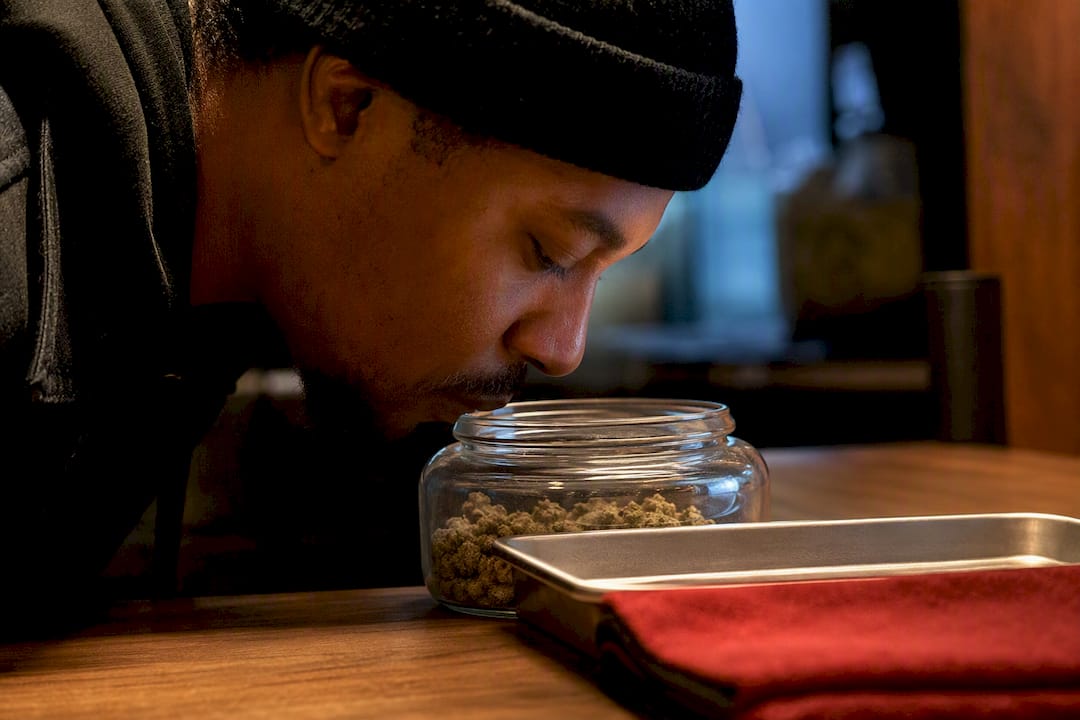
Delivery makes sense once you already trust the source, since same-day service means less time between harvest and your hands. First-time buyers checking out an unfamiliar small producer may still prefer to see the product before committing.
A Seller’s View on Verifying Craft Cannabis
Jake here, and this is Highfashionsmokesandprints’s take: we’ve been moving product through NYC since 2011, and the sellers who last are the ones who treat COAs as a selling point, not paperwork to bury. Every product we carry is tested, and our ordering process includes age verification and same-day delivery windows built around keeping flower fresh, not sitting in a warehouse.
Preserving that freshness matters as much as the testing itself. A tested batch that’s degraded in transit isn’t delivering the terpene profile that COA promised. That’s the part of “craft” most guides skip.
Craft vs. Commercial: What Actually Feels Different
The gap between craft and commercial cannabis shows up less in a lab report and more in how a product hits. Commercial flower, grown for volume and shipped through longer distribution chains, tends to taste flatter and burn less evenly. It still gets you high, but the experience is often one-dimensional: a THC number and not much else.
Craft flower, cured slower and moved through shorter supply chains, tends to hold a stronger aroma and a more layered effect. Consumers who’ve spent years buying commercial-only product often describe craft strains as feeling more “complete,” with clearer onset and a flavor that actually matches the strain name on the jar. Part of that is terpene retention. Part of it is simply fresher trichomes that haven’t degraded during a long trip from farm to shelf.
None of this means commercial cannabis is unsafe or that craft always wins. A well-cured commercial batch can outperform a sloppy small-batch run. But when both are handled properly, the smaller-scale, shorter-chain product usually delivers a more distinct, more nuanced experience, especially with strains chosen for their terpene content rather than their THC score alone. If you’re trying to decide which format suits the experience you want, our comparison of flower versus vapes breaks down how consumption method changes what you actually feel.
How NYC’s Legal Framework Shapes Craft Cultivation
New York built its microbusiness license specifically to carve out room for small growers instead of letting a handful of large operators dominate the market from day one. The canopy caps and vertical-integration rules from the Office of Cannabis Management mean a microbusiness can’t simply scale production the way a large cultivator would. That’s a deliberate limit, not an oversight.
It cuts both ways. The same caps that protect small growers from being squeezed out by bigger competitors also cap how much any single craft brand can produce, which is part of why certain sought-after NYC strains sell out fast and don’t always come back right away. Vertical integration also means a microbusiness handles its own retail or close partnerships, rather than relying on a separate, larger distributor to move product citywide.
For NYC specifically, that framework has real upside: it keeps a meaningful share of licenses in the hands of local growers rather than out-of-state cultivation companies, and it ties craft branding to something the state actually regulates rather than a marketing term with no legal weight. The tradeoff is availability. Because the system favors small lots over mass production, craft cannabis in NYC will likely stay a specialty purchase rather than the default option on most menus, at least while the license structure remains this tightly capped.
What Craft Cannabis Actually Costs in NYC
Craft flower in NYC typically runs higher per gram than mass-market product, mainly due to labor-intensive cultivation and lower yields. A microbusiness hand-trimming small lots and slow-curing for weeks simply produces less per square foot than a large commercial grow, and that cost gets passed to the shelf price.
Commercial flower benefits from scale: bigger canopy, faster turnover, and processing efficiencies that bring the per-gram cost down. Craft producers don’t have access to that scale by design, since the microbusiness license structure caps how big they can get. That’s the tradeoff buyers are actually paying for: more attention per plant, not necessarily a fancier package.
Where the price gap narrows is with pre-rolls and smaller formats, where craft brands often compete more directly on price to move product before it loses freshness. Vape and concentrate pricing tends to track closer to commercial rates across the board, since the extraction process evens out some of the labor-cost difference that separates craft flower from mass-produced flower. If you’re weighing formats on both price and experience, weighing flower against vapes side by side helps clarify where the premium is actually worth paying.
Why More NYC Buyers Are Choosing Craft
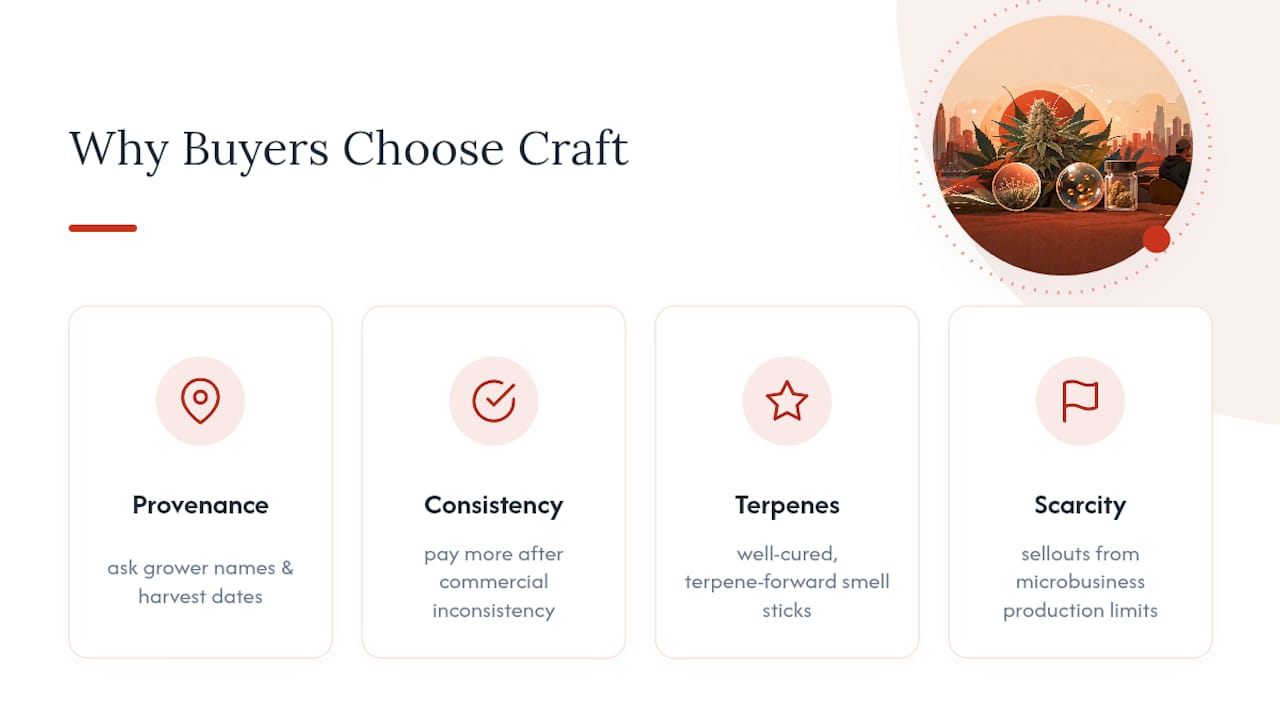
Demand for small-batch cannabis in NYC has grown alongside the city’s broader shift toward knowing where products come from, the same instinct that built the borough’s farm-to-table restaurant scene now shows up at the dispensary counter. Buyers who once shopped purely on THC percentage are increasingly asking about grower names, harvest dates, and terpene content before they check out.
Part of that shift comes from repeat customers getting burned by inconsistent commercial batches and deciding it’s worth paying more for a product that performs the same way every time. Part of it is simple curiosity: once someone smells a well-cured, terpene-forward flower next to a mass-market jar, the difference tends to stick with them. Cannabis events around the city, from grower meetups to strain-tasting pop-ups, have also given craft producers a direct line to customers who want that story behind their purchase, something a big commercial brand rarely offers.
The tightening of the microbusiness license itself feeds this demand too. Because small growers can only produce so much, popular craft batches sell out and build the kind of anticipation you don’t see with unlimited commercial supply. That scarcity, combined with more educated buyers asking better questions at the counter, points toward craft cannabis holding a growing, not shrinking, share of what NYC shoppers actually seek out.
Craft Producers and Brands Worth Knowing in NYC
New York’s craft scene is still young compared to legacy markets like California or Colorado, since adult-use sales only began ramping up in recent years. What’s emerged so far is a mix of small indoor growers running tight microbusiness operations, upstate outdoor and greenhouse farms shipping into the city, and a handful of processors specializing in live resin and small-batch concentrates rather than flower alone.
Rather than chase a single “best” list, the more useful approach is watching for the traits that separate a genuine craft operation from a brand simply borrowing the label: a named farm, consistent COA disclosure, and terpene percentages that hold steady from batch to batch. Local growers who publish harvest dates alongside lab results tend to be the ones actually earning the craft designation, not just applying it as a sticker.
The strongest signal isn’t a brand’s marketing copy. It’s whether the same producer shows up on your COA batch after batch, with numbers that track close to what they reported the last time you bought from them.
The Verification Habit Most Craft Guides Skip
Most craft cannabis coverage treats this like a shopping list: find the trendiest small-batch brand, buy it, done. That misses the actual skill involved, which is verification, not brand-chasing.
The conventional advice tells people to look for “artisan” packaging or a compelling origin story. Neither means anything without a COA behind it. A brand can call itself craft and still ship flower that’s sat in a warehouse for three months, losing terpenes the whole time. The packaging won’t tell you that. The lab report will.
If there’s one habit worth building, it’s this: check the batch number every single time, not just the first time you try a brand. Producers change growing conditions, cure times slip, and a strain that impressed you in March can be a different product by September. Freshness and terpene consistency matter more than brand loyalty, and they’re the two things a quick COA check actually confirms.
Prioritize verification over reputation. Reputation tells you what a brand used to be. The COA tells you what’s in your hand right now.
— Jake
Order Verified Craft Cannabis for Same-Day NYC Delivery
Reliable online dispensaries offer products with lab testing and ordering processes that include transparent COAs, clear batch tracking, and secure age verification at checkout.

Some NYC dispensaries offer day and night menus designed for same-day delivery to help orders arrive fresh. New customers often receive incentives on their first order, and referral programs may reward repeat customers.
| What You Get | Why It Matters |
|---|---|
| Lab-tested products with COA access | Confirms potency, terpenes, and safety before you buy |
| Same-day delivery windows | Shorter time from stock to your door means fresher flower |
| Secure age verification | Keeps ordering compliant and discreet |
| First-time and referral incentives | Rewards new and repeat NYC customers |
If you’re new to edibles or concentrates and want to get dosing right on your first order, start with our beginner’s guide to dosing edibles safely before you check out.
Sources
- NYC Department of Health — Marijuana information
- Office of Cannabis Management — Microbusiness license overview
- University of Arizona health sciences — Study on terpenes and effects