Read our Google Birdeye Reviews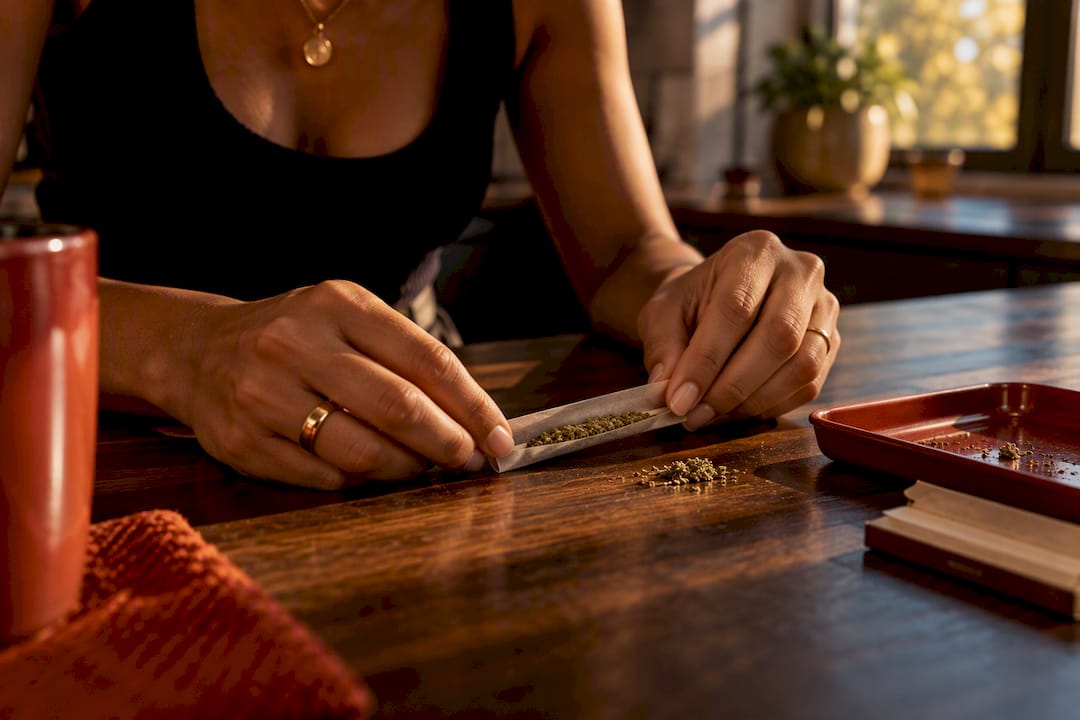
To roll a basic joint, grind your flower, place a filter, evenly fill and shape the paper, tuck and roll with even tension, then seal and pack the ends. Good technique matters more than expensive gear, and it gets easier after two or three tries. The full walkthrough below breaks each stage down so you’re not guessing.
TL;DR:
- Medium-coarse ground flower of 0.5 to 1 gram prevents airflow issues and uneven burning in beginner joints.
- Using a properly aligned filter and shaping the flower into a canoe helps ensure a smooth, even burn and reduces common mistakes like canoeing.
- Keeping the joint loose enough to draw comfortably is crucial, as tight joints restrict airflow and loose joints burn unevenly or fall apart.
- Pre-shaped cone joints and pre-rolls offer beginner-friendly options, reducing the skill required and ensuring consistent results.
- Proper storage in airtight, dark containers with humidity packs maintains joint freshness, preventing crumbling and drying out before use.
Table of Contents
- What You Need Before You Roll a Joint
- Step-by-Step Instructions for Rolling a Joint
- Fixing Common Joint Rolling Mistakes
- Joint vs Spliff vs Blunt vs Cone: What’s the Difference?
- Is Smoking a Joint Safe? What to Know First
- How to Store a Rolled Joint
- A Few Honest Words on Learning This Skill
- Skip the Roll: Order Tested Pre-Rolls Instead
- Sources
- FAQ
What You Need Before You Roll a Joint
Rolling a joint well starts with picking the right materials, not raw talent. Rolling papers come in a few sizes: single wide fits a quick, small session, while king size gives you more room to work with and burns longer. Hemp papers burn a little slower and taste earthier; rice papers are thinner and near flavorless, which many beginners prefer while they’re still learning to control the burn.
A filter, sometimes called a crutch, keeps loose flower out of your mouth and gives the joint a stable base to hold. Pre-rolled tips save time; a DIY version folded from a business card or a strip of thin cardboard works just as well.
Grind consistency matters more than most beginners realize. Medium-coarse is the target. Grind too fine and you choke off airflow, which causes harsh, uneven hits.
- Rolling papers (single wide or king size, hemp or rice)
- Grinder, or scissors if you’re grinding by hand
- Filter/crutch (pre-rolled or DIY)
- A rolling tray to keep flower contained
- A packing tool, chopstick, or pen cap for finishing
Step-by-Step Instructions for Rolling a Joint
This is the part that actually matters, and it maps closely to how most beginner tutorials sequence the process: grind, fill, shape, roll, seal, finish. Follow it in order the first several times, and the moves will start to feel automatic.
- Grind your flower. Aim for medium-coarse, not powder. For a standard joint, 0.5 to 1 gram is typical. Too fine a grind packs down and restricts airflow; too coarse leaves gaps that burn unevenly.
- Place the filter and orient your paper. Set the filter at one end of the paper, glue strip facing up and toward you. This is the setup step almost every guide gets right, and skipping it is the single most common beginner mistake.
- Fill the paper evenly. Spread the ground flower along the crease in a line, denser in the middle and tapering slightly at the ends. This creates what’s often called a “canoe”: a trough shape in the paper that keeps flower contained while you shape it.
- Pinch, tuck, and roll. Pinch the paper between your thumbs and forefingers on both sides, then roll it back and forth to compress the flower into a cylinder. Once it holds its shape, tuck the unglued edge under the packed flower and begin rolling it around, keeping steady, even tension the whole way.
- Seal and pack. Run your tongue lightly along the glue strip, or use a small amount of water, then press it down and roll it smooth. Use a packing tool, chopstick, or pen cap to compact the open end, then twist or fold the tip closed.
- Light it evenly. Rotate the joint over the flame so the tip chars evenly all the way around before you take your first real draw. Slow, gentle first pulls help lock in an even burn instead of racing the cherry down one side.
Pro Tip: Roll with your hands, not your fingertips only. Use the pads of your thumbs and index fingers to roll the whole cylinder back and forth in one motion. It distributes tension evenly and is the fastest fix for lopsided, canoe-prone joints.
Fixing Common Joint Rolling Mistakes
A joint that’s too tight barely draws air and feels like sucking through a straw; loosen it slightly by gently rolling it between your palms to redistribute the flower. One that’s too loose burns fast, drips resin, or falls apart. If that happens, repack the loose end gently with a pen tip rather than starting over.
Canoeing, where one side burns faster than the other, usually comes from an uneven fill or an uneven light. Mid-smoke, you can often correct it by licking your finger and dampening the fast-burning side, or simply rotating the joint as you smoke.
- Too tight: massage gently to loosen packed flower
- Too loose: repack the open end, don’t reroll from scratch
- Canoeing: dampen the hot side or rotate the joint as you smoke
- Over-grinding: sticks to a medium-coarse texture to protect airflow
Pro Tip: A crutch isn’t just about comfort. It stops flower from getting sucked into your mouth as the joint burns down, and it gives you a stable grip point so the last third doesn’t collapse.
Joint vs Spliff vs Blunt vs Cone: What’s the Difference?
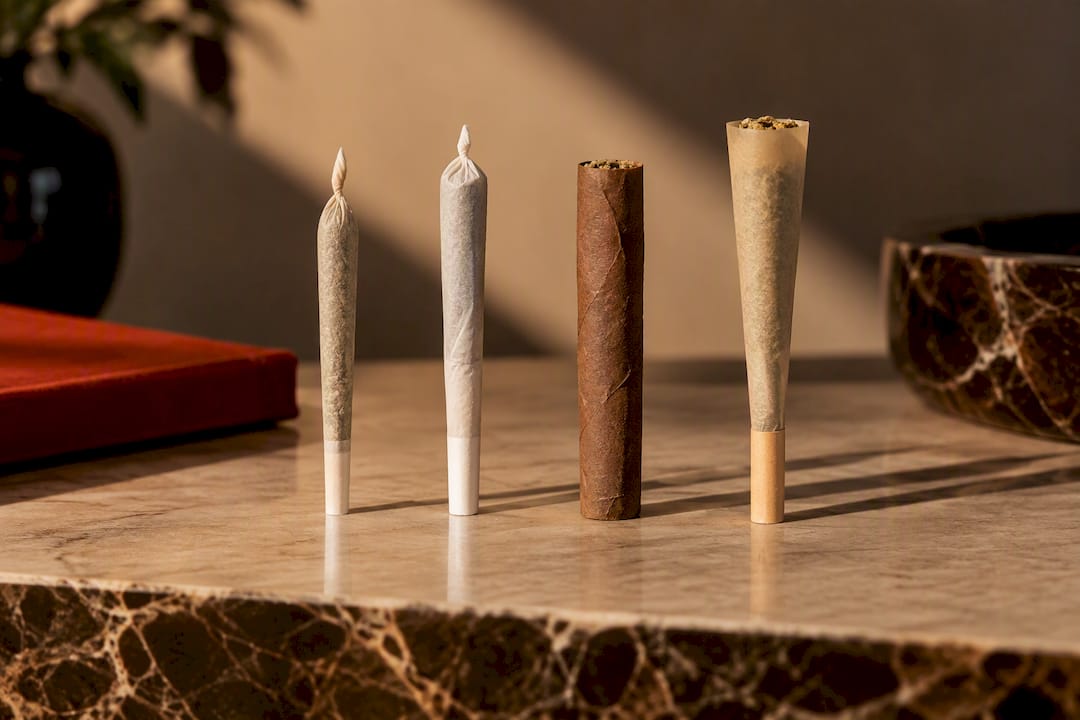
These terms get used interchangeably, but they’re not the same thing. A cone-style joint is pre-shaped, wider at the tip and narrower at the filter, and it’s often the easiest format for someone still learning joint rolling techniques because the paper is already shaped for you.
A spliff mixes tobacco with cannabis, which changes the burn rate and adds nicotine, something many people specifically avoid for that reason. A blunt swaps rolling paper for a tobacco leaf wrap, giving a slower burn and a noticeably different taste and effect profile than a paper joint.
- Cone joints: pre-shaped, beginner-friendly, just pack and twist
- Spliffs: tobacco mixed in, faster burn, added nicotine
- Blunts: tobacco leaf wrap, not paper, slower and stronger-tasting
- Pre-rolls: no rolling required, consistent every time
Is Smoking a Joint Safe? What to Know First
Smoking is how most cannabis users consume it. A 2022 survey found 79.4 percent of current users reported smoking as their method, so the risks tied to combustion apply to the majority of people rolling their own joints.
Cannabis smoke carries toxins and irritants similar to tobacco smoke, and long-term smoking is linked to airway inflammation and higher bronchitis risk. Impairment is the other piece people underestimate. The World Health Organization notes that chronic use is tied to psychomotor impairment and higher accident risk, and that effect can linger for hours after your last hit, well past when you feel “normal” again.
Start with a small amount, wait to see how it hits you before smoking more, and never drive until you’re confident the effects have fully worn off.
Laws also aren’t uniform. As of 2025, 24 states plus DC allow recreational cannabis and 40 allow medical use, but possession limits, minimum age, and where you’re allowed to smoke vary by state and even by city. Check your state’s specific rules before you assume anything is legal where you live, and stick to lab-tested flower from a known source rather than anything unlabeled.
How to Store a Rolled Joint
Keep rolled joints in an airtight tube or container away from heat and direct light; a small humidity pack helps prevent them from drying out and crumbling.
- Airtight tube or glass jar, kept out of sunlight
- Cool, dark spot for anything you’re not smoking soon
- Label containers and store them well away from kids
A Few Honest Words on Learning This Skill
Watching someone roll for the first time, the most common mistake isn’t sloppy technique. It’s rushing the fill before the flower is spread evenly, which guarantees a canoe two minutes later. The fastest way to improve isn’t buying better papers. It’s rolling five joints back to back in one sitting and paying attention to what changed between the first and the last.
Check your local laws before you assume anything, and take it slow with dosing regardless of how experienced you are. If rolling isn’t your thing, there’s no shame in reaching for a tested pre-roll instead.
— Jake
Skip the Roll: Order Tested Pre-Rolls Instead
An alternative to spending an evening learning to roll is same-day delivery of lab-tested pre-rolls and flower straight to your door, at a consistent quality you don’t have to troubleshoot yourself. If canoeing, uneven burns, and packing frustration aren’t how you want to spend your night, ordering a pre-roll gets you the same result without the practice runs.

Every product listed moves through lab testing before it reaches you, so dosing stays predictable from one pre-roll to the next, which matters more than most people expect once they’ve had one joint hit twice as hard as the last. Delivery fees are modest too: Queens orders start from $8, while Manhattan and The Bronx start from $12, with discreet, professional service on every run. Browse the current menu of flower, vapes, and pre-rolls and place your first order tonight.
Sources
- CDC MMWR — Public health messaging on cannabis use and risks
- WHO facts on cannabis
- Alcohol, Drugs and Addictive Behaviours / NIAAA – About cannabis policy
FAQ
What Does It Mean to Roll a Joint?
Rolling a joint means grinding cannabis flower and packing it into a rolling paper with a filter, then shaping and sealing the paper into a smokable cylinder. It’s the most common way people consume cannabis, with 79.4 percent of surveyed users reporting smoking as their method.
What Is the Correct Way to Roll a Joint?
There’s no single “correct” method, but the standard sequence is grind, place a filter, fill evenly, shape a canoe, tuck and roll with steady tension, then seal and pack the ends. Following that order and using a medium-coarse grind prevents most beginner mistakes.
What Are Common Mistakes When Rolling a Joint?
The biggest ones are uneven filling (which causes canoeing), rolling too tight or too loose, and over-grinding flower into a powder that chokes airflow. Most of these are fixable without starting over. Gently repacking or massaging the joint usually solves it.
Is Rolling a Joint Illegal?
Rolling and possessing cannabis is legal for adults in the 24 states plus DC that allow recreational use, and in the 40 states with medical programs, but rules on age, possession limits, and public use vary by location. Always check your specific state and city rules before assuming legality.
Do I Need a Filter to Roll a Joint?
A filter isn’t required, but it stabilizes the joint and keeps loose flower out of your mouth as it burns down. Pre-rolled tips are convenient, while a strip of folded cardboard works as a free DIY option.