Read our Google Birdeye Reviews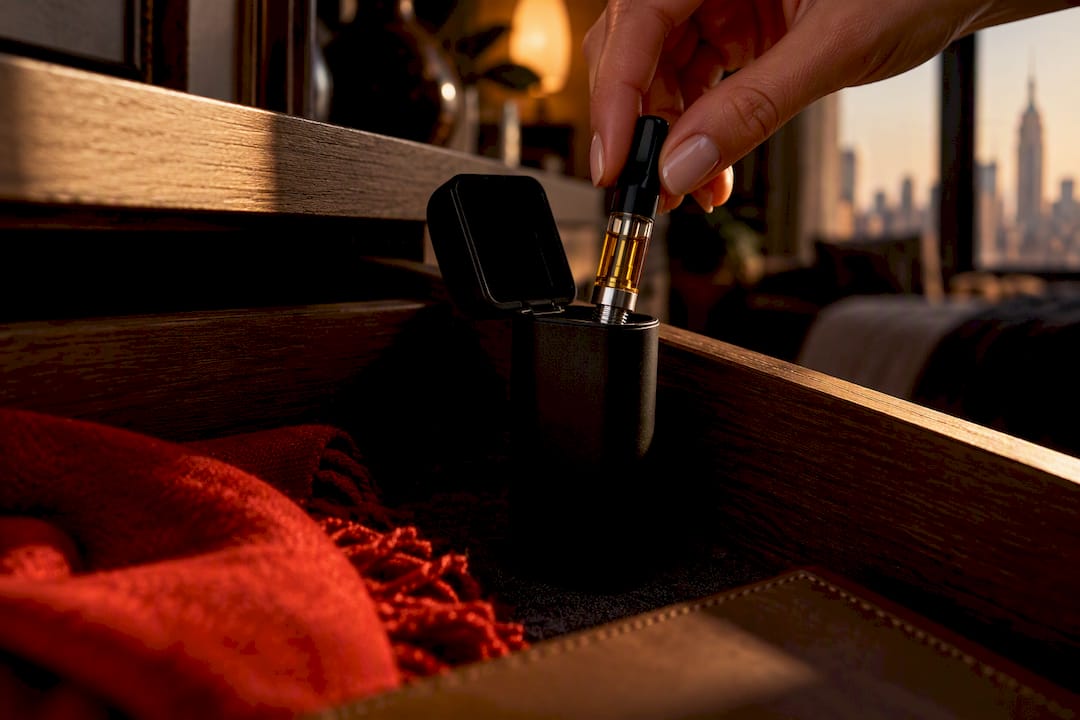
Store vape carts upright, at a cool room temperature, away from light, capped when not in use, and detached from the battery. Skip this and you invite the three problems that ruin cartridges: leaks from oil pooling at the mouthpiece, clogs from thickened or crystallized oil, and potency loss from heat and light breaking down cannabinoids. Use a cartridge within about six months for the best flavor and effect, and don’t push much past twelve.
TL;DR:
- Storing cartridges upright, at room temperature between 60 and 75°F, and away from light prevents leaks, clogs, and cannabinoid degradation.
- Detaching the cartridge from the battery and keeping it capped and upright prolongs freshness and reduces risk of leaks and uneven heating.
- Oil thickens in cold storage and thins or crystallizes in high heat, so gradual warming before use avoids clogs and leaks.
- Cartridges typically retain peak flavor and potency for about six months, with acceptable quality up to twelve months if stored correctly.
- Using opaque containers and desiccant packs helps maintain optimal humidity levels between 30% and 50%, reducing hardware corrosion.
Table of Contents
- How Should You Store Vape Carts to Prevent Leaks and Clogs?
- What’s the Best Way to Handle Batteries When Storing Cartridges?
- Why Is My Cart Leaking or Clogged, and How Do I Fix It?
- How Long Do Vape Cartridges Stay Good in Storage?
- Does Humidity Affect Vape Cartridge Storage?
- Glass or Plastic: What’s the Best Material for Storing Vape Carts?
- What Are the Signs a Cartridge Has Gone Bad?
- Are There Legal Rules for Storing or Shipping Vape Cartridges?
- How Do You Travel With Vape Cartridges Without Damaging Them?
- Retailer-Backed Guidance and Where to Learn More
- A Quick Daily Checklist From the Retail Floor
- Shop Tested Cartridges and Storage Accessories With Same-Day Delivery
- Sources
- FAQ
How Should You Store Vape Carts to Prevent Leaks and Clogs?
Position, temperature, light, and air exposure do more damage to a cartridge than time alone. Get these four right and most storage problems disappear before they start.
Store cartridges mouthpiece up, every time. Cannabis oil is viscous, but it still flows downhill, and cartridges rely on a wicking port near the bottom to feed oil to the coil. Lay a cart on its side or upside down and oil migrates toward the mouthpiece, where it either seeps past the seals or floods the airpath and produces a wet, sputtering hit on your next draw. Upright storage keeps oil sitting where the wick expects it.
Temperature is the bigger lever most people ignore. A Scientific Reports stability study found that oil held at 37°C (about 99°F) for 30 days lost up to 20% of its CBD content, while the same 30-day window under light exposure caused roughly 13% CBD degradation. That’s why the working range for cartridge storage sits at 60 to 75°F (15 to 24°C). Anything above 80°F thins the oil and speeds up cannabinoid breakdown; anything near freezing raises the risk of crystallization, especially in high-THCA formulations.
Light does its damage quietly. UV and even regular indoor light accelerate the same degradation pathways that heat does, breaking down terpenes and cannabinoids molecule by molecule every day a cart sits exposed on a shelf.
Pro Tip: A cardboard shoebox in a closet does more for your cartridge than a glass display case on a sunny windowsill.
Practical rules that cover all four factors:
- Keep carts vertical, mouthpiece pointing up, in a drawer or case.
- Store at room temperature, away from radiators, car dashboards, and windowsills.
- Use an opaque container, a drawer, or the original box to block light.
- Replace the cap or use a silicone cover any time the cart isn’t in the battery.
What’s the Best Way to Handle Batteries When Storing Cartridges?
Detach the cartridge from its battery whenever you’re not using it. Left connected, most 510 threaded batteries draw a small parasitic current even when “off,” and a stray bump against the fire button in a bag or pocket can trigger the coil against oil that’s just sitting there, wasting product and heating the cartridge unevenly.
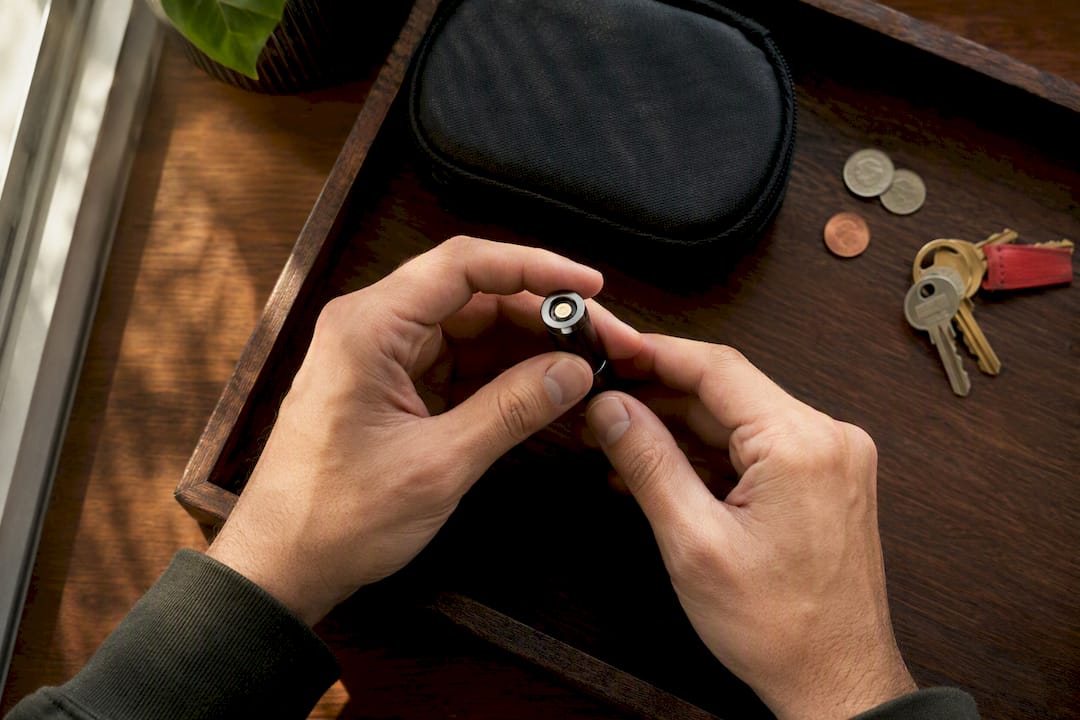
Batteries deserve their own care. Keep them out of pockets or bags that also hold loose change, keys, or anything metal. A short circuit against a stray coin is a real fire risk, not a theoretical one. Inspect batteries periodically for swelling, discoloration, or a warm-to-the-touch feel when idle, and take any damaged unit out of service and dispose of it through your local hazardous waste program rather than the trash.
Charging deserves the same attention. The FDA’s Center for Tobacco Products battery safety guidance recommends using only the charger that came with the device, never leaving batteries charging unattended, and avoiding phone or tablet chargers that weren’t designed for the battery’s specifications. Skip overnight charging altogether.
If you’re running a disposable where the battery can’t be separated from the oil, treat the whole unit like a cartridge: cool, dark storage in a hard case, cap intact, no exceptions.
- Detach carts from batteries between sessions.
- Store batteries away from metal objects.
- Use only the manufacturer’s charger, and never charge unattended.
- Retire and properly dispose of any swollen or damaged battery.
Why Is My Cart Leaking or Clogged, and How Do I Fix It?
Most leaks and clogs trace back to one of four habits: storing the cart sideways or upside down, letting it sit somewhere hot enough to thin the oil, overtightening the cartridge onto the battery thread, or letting cold temperatures crystallize the oil near the wicking port. Each cause has a different fix.
- Warm it slowly. If oil looks thick or cloudy from cold storage, hold the cartridge in your palm or a warm pocket for a few minutes before use. Never use a lighter or open flame to speed this up.
- Prime gently. A stuck or clogged cart often clears with one or two short, gentle preheat pulls rather than one long hard draw that floods the coil.
- Clean the contacts. Wipe the battery connection and cartridge threading with an isopropyl alcohol swab if you’re getting a weak or inconsistent hit. Buildup there interrupts the circuit as often as clogs do.
- Know when to stop. A burnt taste, visible discoloration around the battery contact, or oil that’s leaked past the seal onto the threading means it’s time to throw the cartridge away rather than keep troubleshooting it.
The prevention checklist is the same four rules from storage: upright, cool, dark, capped. Skip any one of them long enough and you’ll eventually see a leak or a clog.
How Long Do Vape Cartridges Stay Good in Storage?
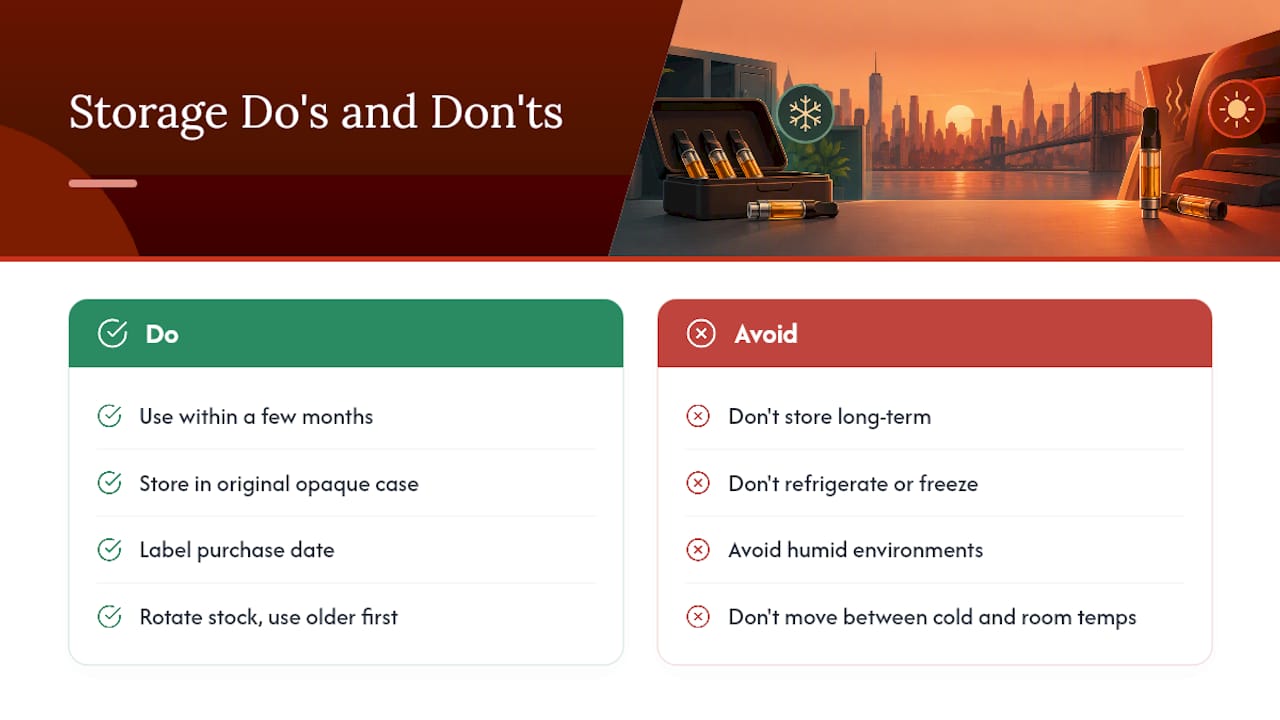
It is generally best to use a cartridge within a handful of months for peak flavor and potency, and not to store it much longer to avoid noticeable degradation. Beyond that window, gradual terpene loss and a slow conversion of THC into CBN, a less potent, more sedating cannabinoid, start to change both the taste and the effect.
Packaging matters more over long stretches than short ones. Keep cartridges in their original opaque packaging or a dedicated airtight case, and avoid humid environments. Excess moisture doesn’t degrade sealed oil the way it does flower, but humidity can corrode battery contacts and packaging materials over months of storage.
Label the purchase date on anything you’re not using right away, and rotate stock so older cartridges get used first. It’s a small habit borrowed from inventory management, but it works just as well in a nightstand drawer as it does in a warehouse.
Skip the fridge and freezer. A study analyzing CBD e-liquids found that refrigeration reduced short-term CBD degradation in bottled liquids under lab conditions, but that result doesn’t translate cleanly to sealed cartridges. Moving a cart between cold storage and room temperature causes condensation inside the cartridge and a spike in oil viscosity, both of which cause the exact clogs and leaks you’re trying to avoid.
Does Humidity Affect Vape Cartridge Storage?
Humidity plays a smaller role than temperature or light, but it isn’t irrelevant. Cannabis oil itself is sealed inside the cartridge and doesn’t absorb ambient moisture the way dried flower does, so you won’t see the oil itself degrade from humidity swings the way a jar of buds would.
The risk is in the hardware. High humidity, especially anything consistently above 60% relative humidity, promotes corrosion on the metal battery contacts and threading, which leads to weak connections, inconsistent hits, and eventually a cartridge that won’t fire reliably at all. It can also degrade cardboard packaging and adhesive labels over months of storage, making batch dates and warnings harder to read.
The optimal range for storing cartridges sits between 30% and 50% relative humidity, roughly the comfort zone of most climate-controlled homes. You don’t need a dedicated humidity-controlled cabinet the way flower storage sometimes calls for. A closet or drawer in a normal living space usually falls within range on its own. If you live somewhere genuinely humid, a small desiccant packet, the kind that ships inside shoeboxes and electronics, dropped into a storage container adds a cheap layer of protection without any special equipment.
Glass or Plastic: What’s the Best Material for Storing Vape Carts?
Glass and hard plastic both work for cartridge storage, and each has a clear tradeoff. Glass containers don’t leach chemicals or retain odors, and they hold up to repeated cleaning without scratching or clouding, which matters if you’re storing multiple carts in the same container over time.
Plastic’s advantage is durability during transport. A hard plastic case absorbs a drop far better than glass does, and cartridges are small enough that a cracked glass container is a real risk if it slips off a nightstand or gets tossed into a bag. Silicone sleeves or padded cases, often plastic-based, add a shock-absorbing layer that neither bare glass nor bare plastic provides on its own.
The material that matters most isn’t glass versus plastic. It’s opacity and seal quality. Whatever container you choose, it needs to block light and close tightly enough to keep dust and air out. A clear plastic bag does neither job well, no matter how convenient it is. A tinted glass jar with a snug lid, or a hard plastic case built specifically for cartridges, both outperform anything transparent or loosely sealed.
What Are the Signs a Cartridge Has Gone Bad?
A cartridge can look fine and still have degraded well past the point of a satisfying hit. Taste is usually the first tell. Oil that’s oxidized or lost most of its terpenes tastes flat, harsh, or faintly like burnt plastic even when the coil itself is working fine.
Performance changes follow close behind. Watch for:
- Weaker vapor production on a pull that used to feel dense.
- A noticeably harsher throat hit than when the cartridge was new.
- Oil that’s turned darker or cloudier than its original color.
- Inconsistent hits that vary pull to pull, even after cleaning the contacts.
Any of these on their own might mean a battery or connection issue rather than degraded oil. All of them together, especially paired with a cartridge that’s been sitting for several months, point to potency loss rather than a hardware problem worth troubleshooting further.
Are There Legal Rules for Storing or Shipping Vape Cartridges?
Storage itself isn’t heavily regulated for adult consumers beyond the basic child-resistant packaging and labeling rules most states already require at the point of sale. Keep cartridges in their original, labeled packaging when possible, particularly if anyone else in the household could mistake them for something else.
Shipping and transport are where the rules have tightened. PHMSA and major carrier policies now require upgraded packaging, labeling, and documentation for any device shipped with a built in lithium battery, which covers most disposable vapes and some all in one cartridge systems. Airlines frequently restrict or outright prohibit carrying THC and CBD vape devices, regardless of what’s legal at your destination, so check both airline policy and your destination’s cannabis laws before you fly with any cartridge in your bag.
How Do You Travel With Vape Cartridges Without Damaging Them?
- Pack cartridges upright and padded inside a hard case, never loose in a pocket or the bottom of a bag.
- Keep caps on for the entire trip, even for short car rides.
- Never leave a cartridge in a parked car. Summer dashboard temperatures routinely exceed 120°F, well past the point of thermal degradation, and winter cold can crystallize oil within an hour.
- Keep cartridges separated from loose batteries, coins, or keys in your bag to eliminate any risk of a short circuit.
- Confirm your destination’s cannabis laws and your airline’s device policy before you pack, since rules vary by state and carrier.
Retailer-Backed Guidance and Where to Learn More
High Fashion Smokes & Prints has spent years watching which cartridges come back with complaints and which don’t, and the pattern holds: heat exposure and sideways storage cause far more failures than manufacturing defects ever do. That real-world pattern lines up with what the peer-reviewed stability data shows about temperature and light.
For deeper hardware guidance, our vape battery safety guide covers charging and damaged-battery handling in more detail, and our breakdown of carts versus disposables explains how storage needs differ between the two formats. We stock tested cartridges alongside cases and caps built for exactly the kind of storage this article recommends.
A Quick Daily Checklist From the Retail Floor
Keep it simple: cap it, stand it up, keep it cool and dark, and pull the battery when you’re done for the day. If a cartridge tastes burnt, looks cloudy, or hits inconsistently after sitting for months, replace it. A five dollar case costs less than the wasted oil from a leaked cart.
— Jake
Shop Tested Cartridges and Storage Accessories With Same-Day Delivery
Getting the storage right only matters if what you’re storing was handled correctly before it reached you. Reliable suppliers test and verify their cartridges before shipping, and some offer same-day delivery in urban areas to reduce transit time and storage-related risks.

Beyond the cartridge itself, the shop carries the cases and caps that make the storage rules in this article easy to follow instead of one more thing to remember. If you’re not sure whether a cart or a disposable fits your habits better, our cart versus disposable breakdown walks through the tradeoffs, and our battery safety guide covers the charging and handling questions that come up most. Browse the current Highfashionsmokesandprints to place a same-day order, or reach out through the site if you’ve got a storage question specific to what you just bought.
Sources
The Scientific Reports stability data backs the temperature and light figures above. The FDA battery safety guidance covers charging risk. The PHMSA shipping rules overview explains transport restrictions. Readers wanting a broader look at vape products can check The French Hemp Empire’s vape and CBD guide for additional commercial context.
- Scientific Reports stability data (2020)
- HPLC analysis of CBD e-liquids and short-term storage findings (2020)
- FDA Center for Tobacco Products — battery safety guidance
FAQ
What Is the Best Way to Store Vape Carts?
Store cartridges upright, at room temperature between 60 and 75°F, away from light, and capped when not attached to a battery. This combination prevents the leaks, clogs, and cannabinoid loss that come from heat, light, and gravity working against the oil.
Can You Store Vape Cartridges in the Fridge?
It’s not recommended for sealed cartridges. Refrigeration can preserve CBD content in bottled e-liquids under controlled lab conditions, but moving a sealed cartridge between cold and room temperature causes condensation and viscosity changes that lead to clogs and leaks in normal use.
How Should I Store Vapes When They’re Not in Use?
Detach the cartridge from the battery, cap the mouthpiece, and place it upright in a cool, dark drawer or case. This keeps the wicking port properly fed with oil and blocks the light exposure that speeds up cannabinoid degradation.
What Happens if I Leave My Cart Upside Down?
Oil gradually migrates toward the mouthpiece, where it can leak past the seals or flood the airpath. The result is usually a messy cartridge and a wet, sputtering first hit the next time you use it, rather than the clean draw you’d get from upright storage.
How Long Can a Vape Cartridge Sit Before It Goes Bad?
Most cartridges hold their best flavor and potency for about six months, with acceptable quality up to around twelve months under good storage conditions. Past that window, expect terpene loss and a gradual shift as THC slowly converts into CBN.